Shop from your pantry, without guessing
Check known ingredients and amounts before shopping, while keeping uncertain quantities and incompatible units visible.
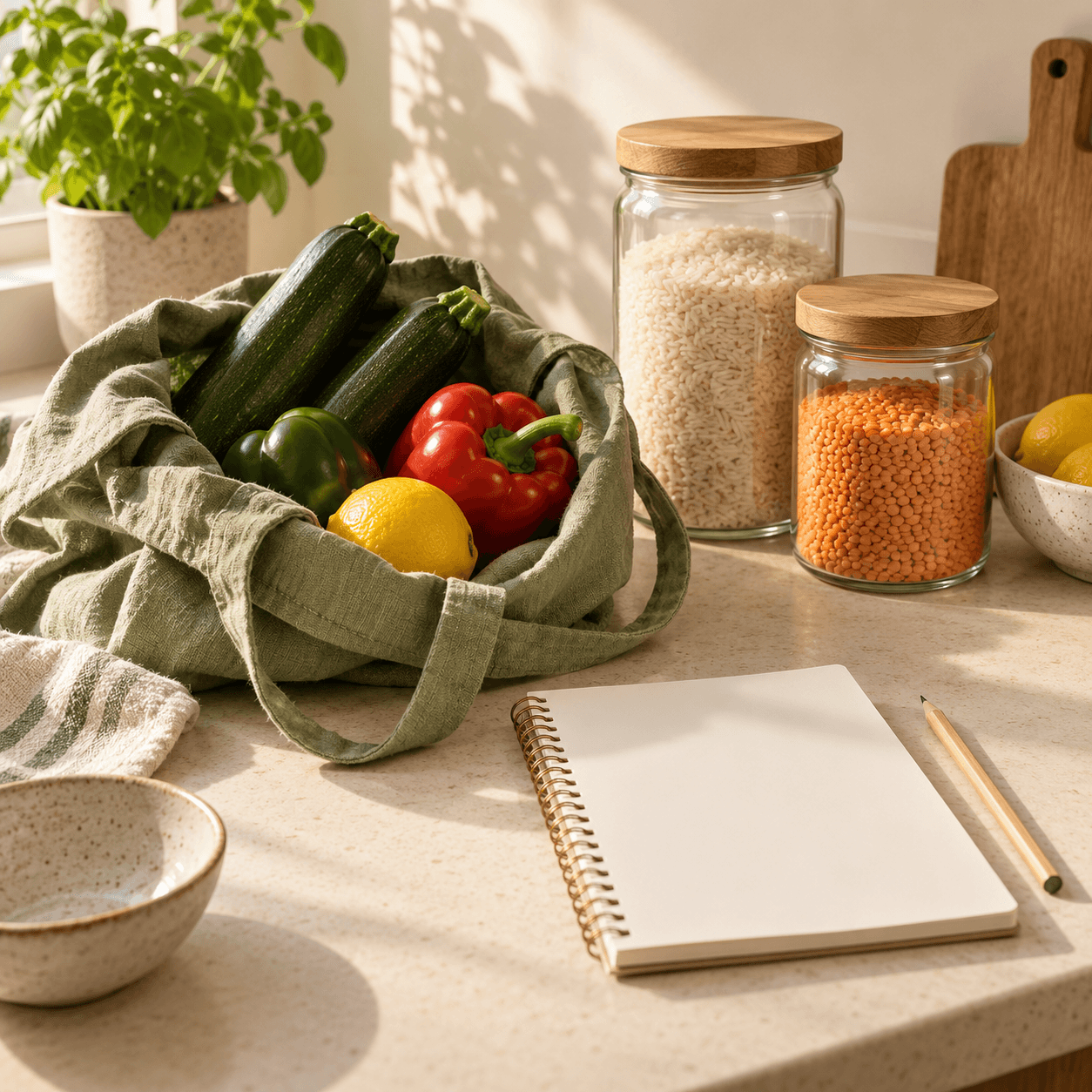
A cupboard check is most useful when it starts with the meals you intend to make. You do not have to catalogue the whole kitchen before writing a better list.
Check one meal at a time
Read its ingredients, then look in the fridge, freezer and cupboard. Record the ingredient and the amount you can actually identify. “Half a packet” is a useful reminder to check the packet; it is not automatically a known weight.
Subtract like from like
If a meal needs 330 g of dry rice and you have checked 100 g of that same dry rice, 230 g remains to buy. That calculation depends on matching the ingredient, form and unit. A bowl of cooked rice is not the same quantity as uncooked rice, and the number of tins does not establish their drained weight.
When those details are uncertain, write “check amount” rather than guessing a conversion. A list with one honest question is more useful than a precise-looking number without evidence.
Keep the non-recipe items
Breakfast staples, household extras and things another person requests may not appear in a dinner recipe. Give them their own lines so a recipe change does not remove them from the shop.
Review before you go
Check whether the diners or meals have changed. Take uncertain packaging details with you if they need a second look. Tick the list as a shopping aid; a tick does not establish that an item arrived, how much was received or what remains in the pantry.
Bring the little things together.
The full Yomli experience connects recipes, planning, pantry, shopping and cooking.
Explore the experienceSomething to correct? Tell us at hello@yomli.au.
← More from the Journal