Scale a recipe for the people coming
Understand recipe yield, age-banded portion estimates and known pantry amounts before calculating an ingredient quantity.
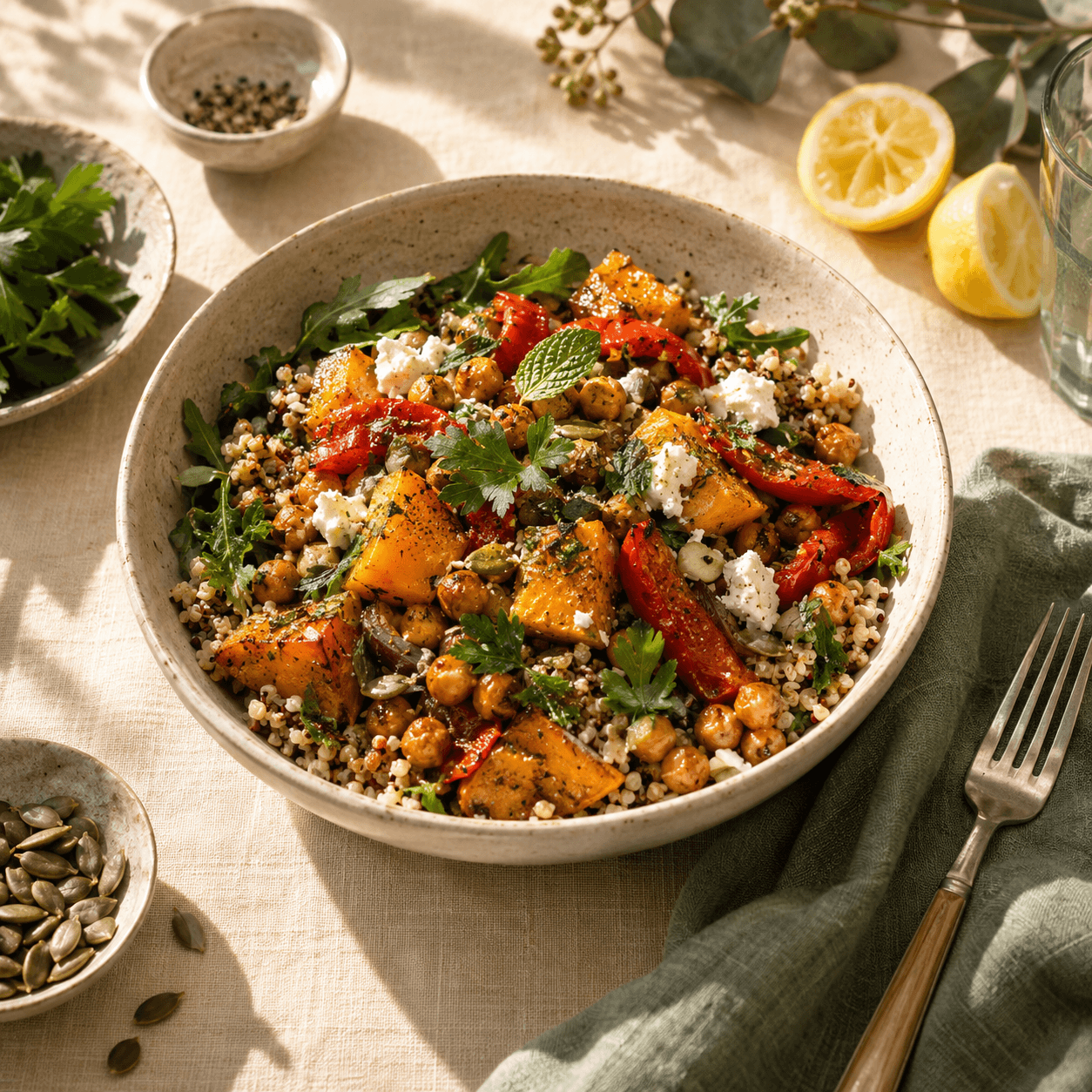
Scaling starts with two questions: what amount does the recipe describe, and how many portions are you preparing? Keep both visible before multiplying ingredients.
Begin with the recipe's actual yield
Start with how many portions the original recipe makes. A recipe for four portions needs a different scaling factor from one for two. Keep that serving basis beside the ingredient amounts before changing the diners.
Count the diners consistently
The illustrative Yomli bands are 1 portion per adult; 0.5 for a child under 5; 0.65 for ages 5–8; 0.8 for 9–12; and 1 for 13+. These are cooking-quantity guides, not a prediction of an individual's appetite or dietary needs.
Two adults with children aged 4 and 9 give 3.3 portions. If the recipe contains 200 g dry rice for 2 portions, the scaled amount is 200 × 3.3 ÷ 2 = 330 g. If that same 200 g amount instead belongs to a four-portion recipe, the amount is 165 g. The serving basis makes the difference.
Check matching stock separately
If 100 g of the same dry rice is confirmed in the pantry, the first example leaves 230 g to buy. Do not convert a cooked amount, vague packet fraction or different ingredient by guesswork. Whole items may also need practical review: a displayed decimal is not a claim that a shop sells that exact fraction.
Bring the little things together.
The full Yomli experience connects recipes, planning, pantry, shopping and cooking.
Explore the experienceSomething to correct? Tell us at hello@yomli.au.
← More from the Journal