Keep family recipes useful, not just saved
Organise recipes from notes, books and screenshots with their source, quantities, serving basis and cooking instructions intact.
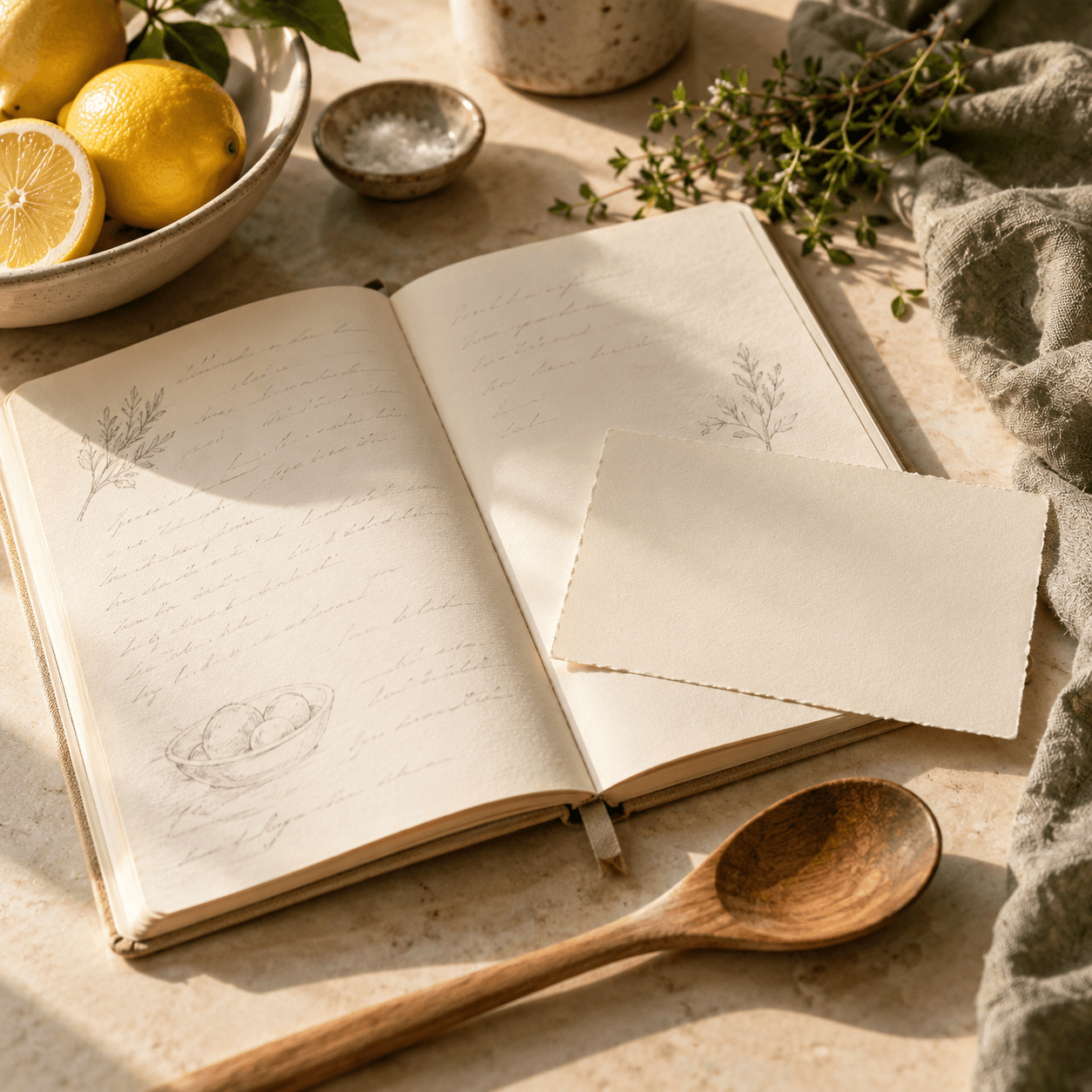
A favourite recipe can be easy to remember and hard to find. It might be in a book, a message, a photograph or a handwritten note. Bringing it into one place helps most when the useful details come with it.
Keep the source attached
Record where the recipe came from and who shared it. Give it a clear title you will recognise later. A source reference helps you revisit the original and distinguish the author's version from changes you have made.
Check the serving basis
Write down what the recipe actually makes. Four people, eight pieces and a large batch are not interchangeable descriptions. Preserve the stated quantities before scaling, and separate ingredient amount from the size of a packet you might buy.
Read the method against the list
Check that each ingredient has a place in the instructions. Keep stated cooking times and temperatures visible, and leave uncertainties as questions. A scanned or imported recipe is a draft to review: a neat-looking transcription can still misread a fraction, unit or handwritten word.
Give your changes their own space
Keep personal variations and household preferences in a note, instead of silently replacing the original. When a variation works well, name that version so someone else knows which one they are following.
Keeping a recipe privately and publishing it for others are separate decisions. A public contribution needs appropriate permission for the prose and images, clear credit and an agreed review process. Saving a recipe does not automatically make it Yomli certified.
Bring the little things together.
The full Yomli experience connects recipes, planning, pantry, shopping and cooking.
Explore the experienceSomething to correct? Tell us at hello@yomli.au.
← More from the Journal